
 See all news
 How to reach us
70 Bolduc Street, Gaspé, Quebec
Canada G4X 1G2
This Canada-wide series of interviews with experts in their fields provides an overview of the deployment of renewable energy across Canada and the steps being taken to help the country achieve carbon neutrality.
Here we present an interview with Brandy Giannetta, Vice President of Public Policy, Government Affairs, and Regulatory Affairs at the Canadian Renewable Energy Association (ACER), on the energy transition in Ontario and the importance of policy for the implementation of renewable energy.
Let’s first review the targets set by the federal government and the Ontario government for reducing greenhouse gas emissions.
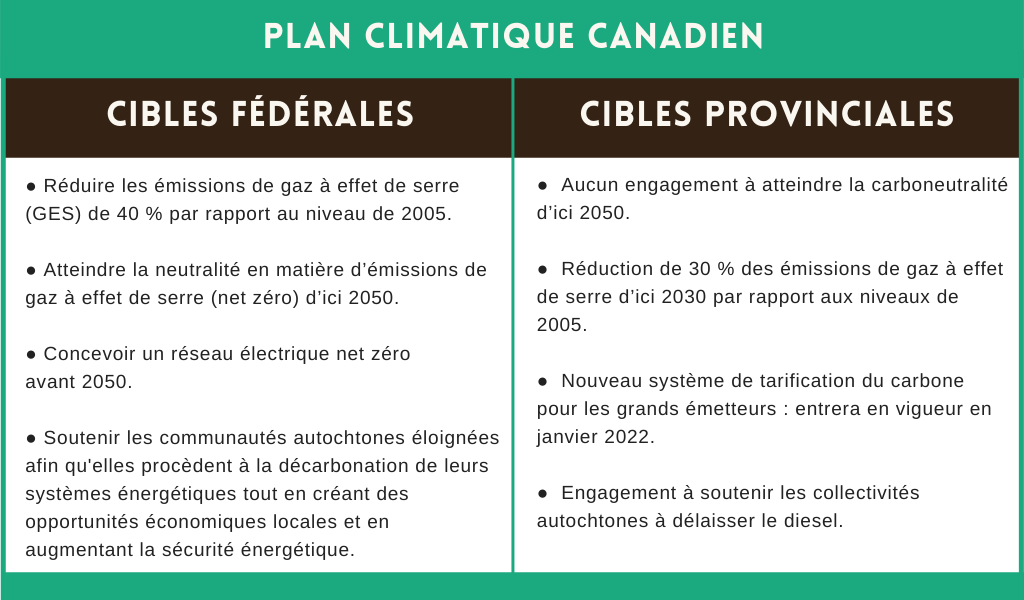
Reference:Pembina Report 2021: All Hands on Deck
Nergica: Could you tell us a little more about the Canadian Renewable Energy Association?
Brandy Giannetta: The Canadian Renewable Energy Association (ACER) is the national association for the wind, solar, and energy storage sectors. We are active across Canada; we advocate for policy and regulatory environments that support wind energy, solar energy, and energy storage. Our mandate is quite broad. We are the result of a merger between the former Canadian Wind Energy Association and the Canadian Solar Industries Association, which joined forces to create our association just last year, and energy storage was added to complement these technologies. As a membership-based organization, we promote these technologies on behalf of our members, particularly to major electric utilities, as well as at the distribution level and for smaller-scale “behind-the-meter” applications.
ACER has more than 300 member companies, including a representative sample of multinational corporations that design, build, own, or operate power generation facilities and energy storage facilities in Canada, as well as technology providers, such as original equipment manufacturers and a wide range of supply chain service providers, including environmental services, legal services, and financial technology. Our members bring a diverse range of expertise, which enables us to continue fulfilling our mission: to promote a wide range of technological solutions from the wind, solar, and energy storage sectors.

Brandy Giannetta. Source: CanREA
Nergica: And what is your role within this organization?
BG: My role at ACER is Vice President, Public Policy, Government and Regulatory Affairs. I lead a team of policy experts working in key regions of Canada—including the Prairies, Ontario, Quebec, and Atlantic Canada—as well as at the federal level. We collaborate with ACER’s member companies to develop policy positions and advocate for favorable outcomes in the markets where network operators and utilities operate, as well as with governments. It’s a very dynamic opportunity to work alongside the sector across Canada. Our team of policy experts works hard every day to deliver ACER’s value proposition to our members.
Before becoming vice president of the policy team, my work focused primarily on Ontario. I worked as the regional director of commercial-scale wind energy in Ontario at the Canadian Wind Energy Association for about eight years before taking on my current role.
Nergica: In your opinion, are Ontario’s environmental goals and the steps to achieve them clear?
BG: I’d say they’re unclear at the moment. One of the challenges we face in Ontario is the gap between the federal government’s policy priorities and those of the provincial government. Canada’s target of achieving carbon neutrality by 2050 is clear, but how Ontario will help Canada reach that target is not. The challenge to the carbon pricing system before the Supreme Court was essentially led by Ontario, so this decision does indeed provide us with some clarity. However, a large portion of Ontario’s electricity generation still emits GHGs.
Ontario was the first jurisdiction in Canada to completely phase out coal from its electricity generation—which is excellent news and a major achievement. Ontario is a leader in this regard, but it still has work to do. It has placed great emphasis on the electrification of the economy as a whole and the role the electricity sector will play in it. However, Ontario’s policymakers and grid operators have not placed as much emphasis on how they will power a decarbonized economy.
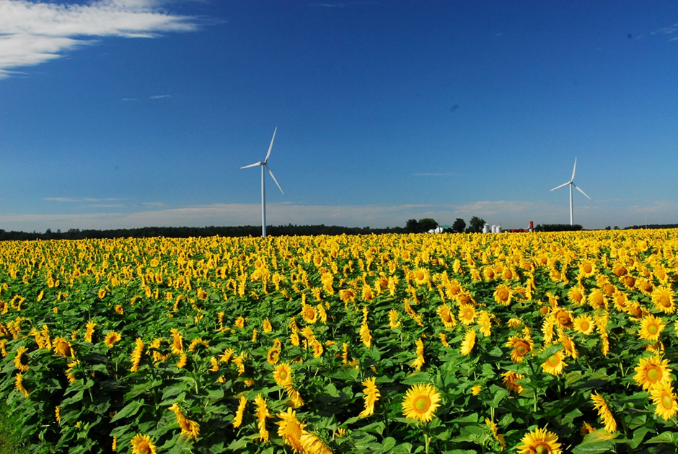
Ravenswood Wind Farm. Source: Capstone
Currently, Ontario relies heavily on gas-fired electricity generation as the province overhauls a large portion of its nuclear facilities, a significant portion of which—representing more than 3,000 megawatts of electricity—will be taken offline in a few years; it is unclear how the grid operator plans to fill this shortfall, other than by relying heavily on natural gas assets. This situation is deeply troubling from the perspective of understanding decarbonization goals and targets. Ontario is not yet aligning its electricity supply with the achievement of these ambitious targets.
There are a few potential solutions for Ontario: we need to build more renewable energy and energy storage facilities in the province, and we need to be clear on how gas-fired assets will be treated—for example, will carbon pricing apply to these assets?
There remains significant uncertainty in Ontario regarding how the Independent Electricity System Operator (OISO) will address the issue of resource adequacy. Ontario’s future supply needs could be higher than those recently projected by OISO, particularly if we take into account potential electrification and the retirement of generating units upon contract expiration.
The supply mechanisms that are part of the Resource Adequacy Framework (Resource Adequacy Framework ) must be flexible and focus on providing a variety of electricity products and achieving various objectives, including cost-effectiveness and emissions reduction.
We need clarity on the continued operation of renewable energy generators and energy storage facilities after contracts expire, to help meet future supply needs. Furthermore, we also need to know more about broader policy objectives to help owners, operators, and lenders make informed and timely investment decisions. Until we have this information, significant uncertainty will persist in Ontario’s electricity markets with regard to investors.
Nergica: Ontario relies heavily on nuclear power, and the closing (in English only) The Pickering Nuclear Power Plant is scheduled to close in the mid-2020s. Does this closure present an attractive opportunity for solar and wind energy?
BG: Yes, absolutely—wind power, solar power, and energy storage have a huge role to play right now, and that will remain the case once a large portion of Ontario’s nuclear energy supply is fully taken offline. We need to replace this nuclear energy with renewable energy and energy storage, which must be cost-effective. Currently, Ontario’s plan—as we understand it—is to bring its gas-fired generators online and optimize these assets. However, there is a cost associated with using these generators; they have a significant environmental impact and adverse consequences in terms of climate change. This solution would lead to a 400% increase in emissions from the electricity sector during the retrofit period. Such a surge is unprecedented today, at a time when the entire world is moving toward decarbonization.

Pickering Nuclear Power Plant. Source: Ontario Power Generation
We should replace decommissioned nuclear power plants with resources that are flexible, provide multiple services to the grid, and benefit both the grid operator and taxpayers. Resources such as wind power, solar power, and energy storage are examples of this. This is particularly true when they are combined in hybrid projects. In Ontario, we are able to build wind, solar, and energy storage projects fairly quickly—where they are needed—and we can do so in an extremely cost-effective manner.
If we want the most cost-effective, innovative, and flexible zero-emission solutions for the grid, there is no doubt that wind power, solar power, and energy storage are the way forward. Why not build them right away?
At the distribution grid level, solar energy, in particular, has an important contribution to make. ACER has just published a study showing that if we continue to exponentially increase the use of rooftop solar panels, we could reduce grid costs by hundreds of millions of dollars per year in Ontario. By applying economic and grid modeling, we have found that there is a very real and attractive opportunity to use rooftop solar photovoltaic panels to benefit all taxpayers in Ontario. This is good news for everyone.
Nergica: In your opinion, what are the main challenges associated with reducing GHG emissions and implementing renewable energy in Ontario?
BG: The early stages of renewable energy adoption in Ontario stemmed from policy directives that were part of the phase-out of coal-fired electricity generation. Ontario has been a leader in the adoption of renewable energy, and unfortunately, as one of the pioneers in this sector, it has also had to bear the burden of the lessons learned. Because Ontario had an ambitious program driven by these policy directives, the rapid pace of development sparked some objections. Some of the province’s communities, where numerous new wind farms were under construction, faced social acceptance issues. Another problem with the rapid adoption of renewable energy is that Ontario has not been able to take advantage of current low prices; solar and wind power now cost 90% and 71% less than in 2009, respectively, and these prices are expected to continue falling.
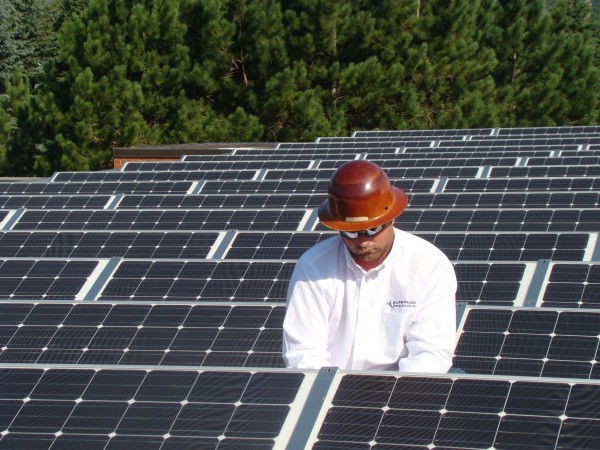
Source: Sault Ste. Marie Economic Development Corporation
Today, we can say: “Yes, let’s build wind and solar power plants. These are the least expensive options for new electricity generation, and there are many other fantastic benefits to these plants. ” We couldn’t say that back when Ontario was making massive investments in the electricity sector to build renewable energy facilities.
One of the challenges Ontario faces is that we no longer have the policy guidelines needed to continue rolling out these technologies, no matter how cost-effective, environmentally friendly, and efficient they are. I believe we still need to address some of the social acceptance concerns that arose ten or twenty years ago, as well as communicate the value these new technologies can offer in Ontario today.
Unfortunately, the Ontario electricity market is a risky investment environment at the moment, primarily due to significant political interference over the past decade. Ontario has many unique assets that currently operate within a hybrid wholesale market. There are several decision-making factors that are not always aligned with one another, which makes the process more complex.
The challenges are not solely technological, since technology is advancing faster than the market. Nor are they determined solely by the market, since we can adapt and design markets to accommodate these technologies. Finally, they are not solely related to political issues; it is voters who influence political decisions, so what Ontarians want also matters. None of these challenges is insurmountable, and as we highlight the zero-emission, flexible, and reliable products and services that wind power, solar power, and energy storage can offer in Ontario, we are confident that these resources will play a role in shaping the future of the electricity sector.
Nergica: The change in emissions in Ontario between 2005 et 2019 was -21%. That’s huge when compared to the -1% average for Canada as a whole. Projections for 2019–2030 in Ontario are stable, according to the report All Hands on Deck from Pembina (in English only) . Do you have any idea what might have contributed to such a reduction in emissions and the plateau the province might reach?
BG: Between 2005 et 2019, Ontario was a global model of climate success. The province was building large numbers of renewable energy facilities and phasing out coal. Ontario was the first jurisdiction in North America to phase out coal from its electricity sector. This was a monumental undertaking, likely one of the most significant individual efforts to reduce GHG emissions in North America at the time. That is why the province saw such a significant reduction in its emissions.
However, while Ontario was building renewable energy facilities to replace its coal-fired plants, it was also adding natural gas to its grid. As a result, emissions from coal decreased, but the province added emissions from natural gas; even though natural gas is more efficient in terms of emissions than coal, it is certainly not a zero-emission resource.
Wolfe Island Wind Farm
During that period, we also experienced a global recession, and Ontario had built an electricity grid that was too large. Many of Ontario’s assets, particularly those powered by natural gas, remained idle for some time. As a result, the emissions potential of these assets did not materialize during the economic downturn.
When the economy picked up again, Ontario did not build any new facilities; instead, it committed to refurbishing its nuclear facilities. That is why we are currently seeing GHG emissions level off.
Several nuclear reactors will remain offline while they undergo refurbishment, and Ontario will rely heavily on these gas-fired resources to make up the shortfall. According to SIERE projections, during this refurbishment period, Ontario could see an increase of up to 400% in its greenhouse gas emissions from the power grid. Gas-fired electricity generation will therefore operate at near-maximum capacity at times, particularly during the summer, when demand is highest. Emissions will rise and eventually level off by 2030, remaining at that level in the following years as nuclear units are brought back online.
Nergica: What has Ontario done to help remote communities in the northern and northwestern parts of the province reduce their reliance on diesel generators?
BG: We know the role that renewable energy can play in helping remote communities phase out diesel. Phasing out diesel is essential for these communities in terms of costs, but, more importantly, in terms of health. By becoming self-sufficient in electricity generation, remote communities will be able to power their schools, health care centers, and grocery stores—where they can refrigerate fresh food more cost-effectively. For these communities, it’s not just about keeping the lights on—it’s about fostering a healthier way of life, and renewable energy can make a significant contribution to that. But Ontario has fallen short.
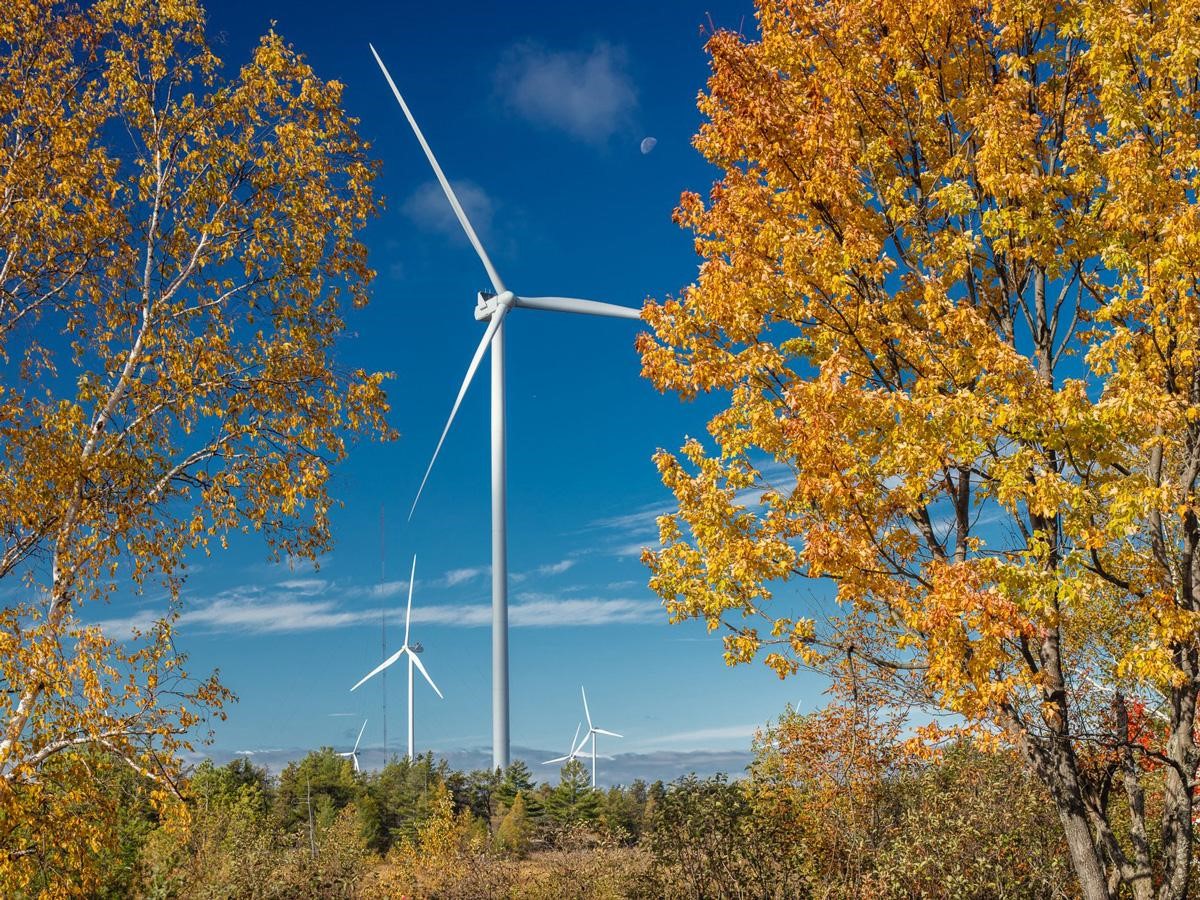
Wind farm on the Henvey Inlet First Nation. Source: Pattern Energy Group LP.
The province has committed to helping communities phase out diesel, but makes no specific mention of the role that renewable energy should play. I believe the federal government has done more to enable remote communities to adopt renewable energy, through various programs and funding initiatives. One of the challenges, particularly in northern Ontario, is access to electricity transmission. So it’s not just a matter of building renewable energy projects and supplying electricity; it’s also about innovating through microgrids and off-grid applications that aren’t connected to the grid. Renewable energy and energy storage are ideally suited for this.
In today’s world, where technologies are so advanced, there are better solutions—for example, microgrids that can provide electricity generation on a community-wide scale. I’m thinking of the rapid success of the Diavik diamond mine, a site that was powered by renewable energy. This energy was also made available to the community, which was thus able to benefit from locally generated electricity for many years, even after mining operations had ceased. Decentralized energy resources or microgrid applications are not only more appropriate but also more affordable. Ten years ago, the challenge was that we didn’t have access to these solutions. Now, we have many more options, thanks to the scale, flexibility, and potential applications that come from combining energy storage with renewable energy generation.
There are excellent opportunities to collaborate with technology providers and governments at the local, provincial, and federal levels to help remote communities become energy self-sufficient.
Remote communities can also take advantage of opportunities to partner with industry companies and technology providers to create their own solutions and lobby governments to provide the necessary funding to make this happen. I would say there is no shortage of options; we simply need to work together to make the investment environment less risky.
Nergica: Is a lot of effort and money being invested in research and innovation in Ontario?
BG: This response has two aspects: from the government’s perspective, not so much, but as a home base for many of these technology companies, absolutely. Ontario is home to a considerable number of companies working on demand response technologies, energy storage and solar energy applications, “behind-the-meter” commercial applications, and cost-saving solutions. Ontario’s industrial electricity rate is very high, and many demand response technology providers are looking to capitalize on peak consumption periods. In addition, many technology providers are helping to deliver solutions that allow companies to take advantage of peak periods and shift consumption (load shifting) . Consequently, there is a significant innovation hub comprised of technology providers in Ontario.
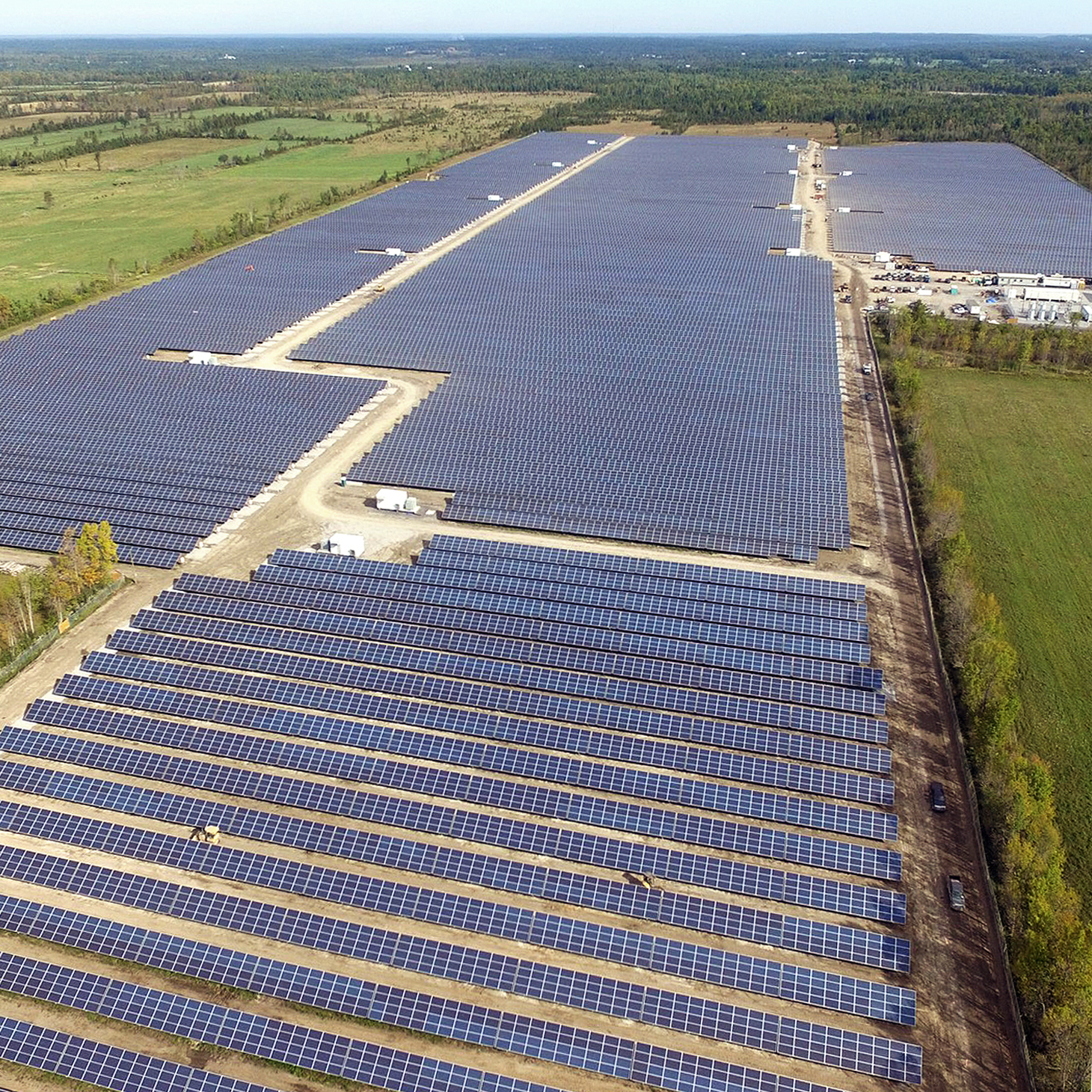
Kingston Solar Project. Source: CIMA+
Unfortunately, these stakeholders are finding even more lucrative opportunities that allow them to access international markets in neighboring jurisdictions, since Ontario’s regulatory environment makes it very difficult to implement these technologies and there are still significant barriers to their adoption in the province. There is still a great deal of work to be done in this area. One of the priorities on which ACER is focusing is trying to open up markets for these technologies, so that they can provide solutions—whether they involve cost reduction, demand management, emissions reduction, or a combination of all these aspects.
Ontario offers many attractive opportunities, particularly given the size of the province’s economy and electricity sector, but we need to tackle regulatory barriers. And that’s a slow process. That’s what I do—it’s what keeps me up at night and what motivates me to get up every morning—working to open up these markets, both in Ontario and across the rest of Canada.
Renewable energy is not a nascent sector in Ontario, and we have many excellent providers of innovations and technologies. So I know we can do this; we just need to accelerate the pace of change in the province.
This interview was conducted as part of a series of regional profiles on renewable energy in Canada. To hear the perspectives of other experts and stakeholders in the energy transition, join us for the second Transition Solutions Symposium in March 2022. This Canada-wide event is dedicated to the technological, social, and policy innovations needed to implement renewable energy in Canada and advance the energy transition.
Another publication in the series:
Johanne Whitmore, Principal Researcher at the Chair in Energy Sector Management at HEC Montréal
More coming soon!
Stay up to date on the latest industry news by subscribing to our newsletter today.

Privacy policy ©2026 Nergica | Réalisation DACTYLO