
 See all news
 How to reach us
70 Bolduc Street, Gaspé, Quebec
Canada G4X 1G2
This Canada-wide series of interviews with energy transition experts provides an overview of the deployment of renewable energy in various regions across Canada and the measures being implemented to achieve carbon neutrality.
Here is a discussion with Dre Amy Hsiao on how she approaches renewable energy as a sustainable materials engineer and board member of the Wind Energy Institute of Canada (WEICan, Wind Energy Institute of Canada, WEICan). Dre Hsiao emphasizes the need to increase outreach, communication, and training efforts, and explains how young people can be drivers of change.
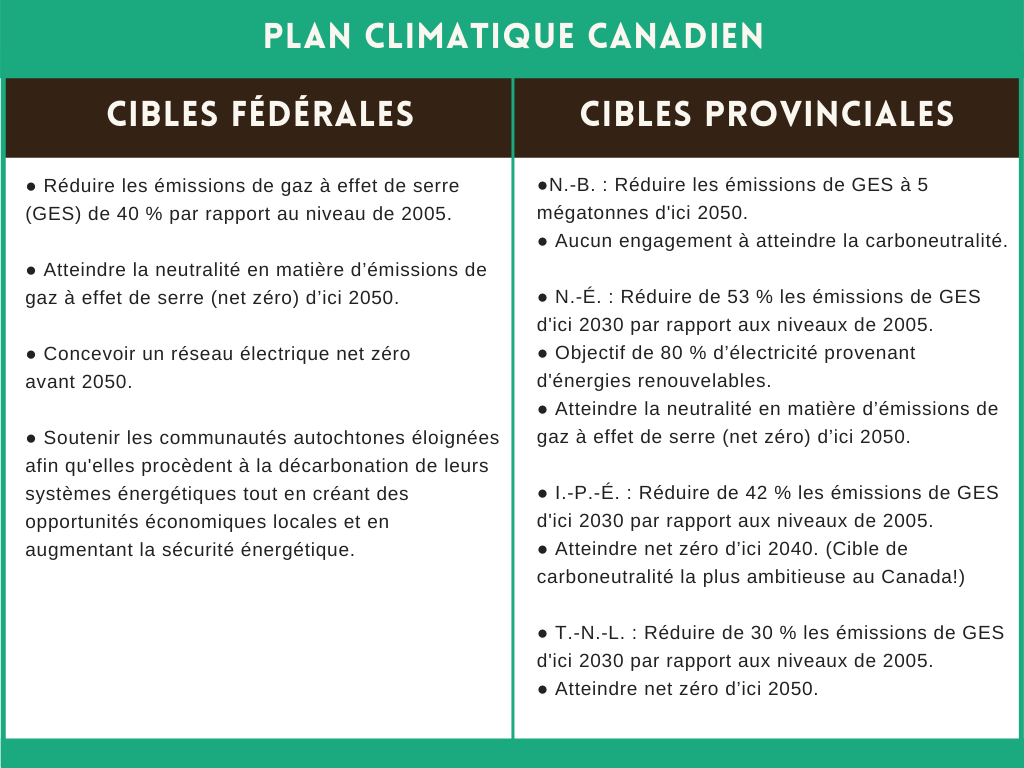
Let’s start by reviewing the targets set by the federal and provincial governments for reducing greenhouse gas emissions.
Nergica: Could you tell us a little more about your role at the University of Prince Edward Island (UPEI)?
Dre Amy Hsiao : As Associate Professor in the School of Sustainable Design Engineering, I am interested in various fields, including 3D printing of metal parts (component design and characterization of material properties), corrosion and material degradation under extreme conditions, and materials for sustainable development applications.
When I started my studies, I never imagined that materials science was all about sustainability—whether it was about making a material durable or studying materials for sustainable development purposes!My current research focuses in particular on materials and the processing of sustainable applications, such as solar panels, to assess where we can make the process less polluting, how to reduce energy consumption, the time required, or the manufacturing steps, and at which stages we can improve the technology’s efficiency. We examine the life cycle to determine how to make it more environmentally friendly and efficient.

Dr. Amy Hsiao.
I also worked on a project with the Canadian Wind Energy Institute (CWEI, Wind Energy Institute of Canada, WEICan), during which we studied the degradation that occurs on the leading edge of wind turbine blades [the edge that “cuts through the wind”]. This part of the blade tends to experience much more wear and corrosion. We conducted accelerated laboratory tests to evaluate the performance of a new generation of coatings and paints to help WEICan select materials.
The third project focuses on characterizing new metal alloys for electric vehicles. The transition from mechanical to electric operation can reduce weight, minimize failures caused by fatigue, corrosion, and wear, eliminate the use of hydrocarbons, and introduce new technologies using magnetic actuation.
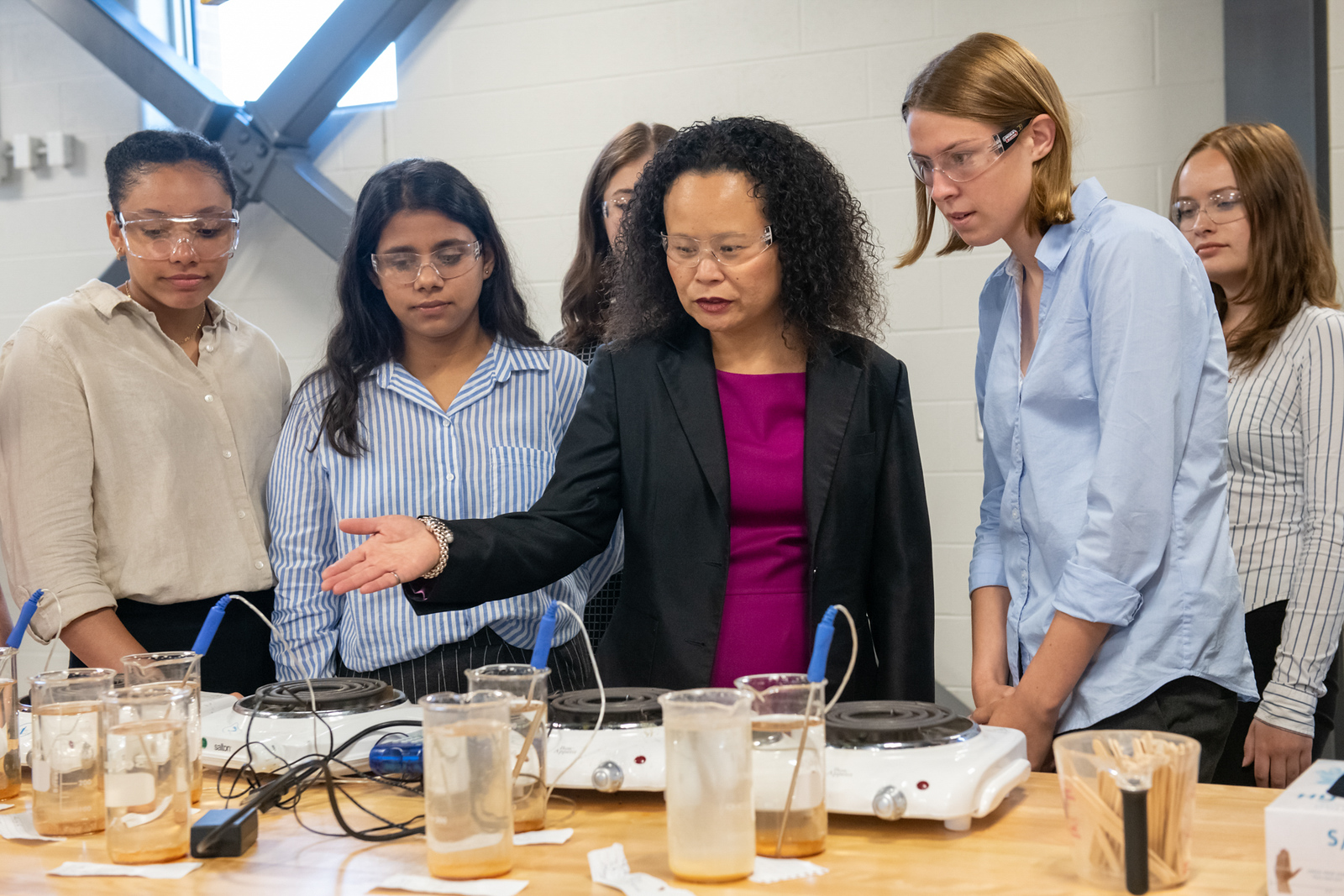
Part of my responsibilities as a professor at UPEI is teaching a course titled Sustainability in Engineering Design (Sustainable Development in Engineering Design): This is a required introductory course for first-year engineering students. During one of the lab sessions, students build an organic solar cell using local berries as photosensitizers. Many students have an epiphany at this point. This lab resonates with students because PEI is deeply connected to agriculture and its land. The experience leaves a lasting impression on the students; when they return home, they explain to their families, “This is technology, and this is how to make it sustainable.”
As part of my class, we’re also learning how to conduct energy audits. We compare the amount of energy used to fly on an airplane, to plant a tree, and so on. We also analyze how many light bulbs in the house could be replaced with LEDs and how much energy could be saved—and whether these more expensive bulbs are worth it in the long run.
I hope that students will share these concepts with their friends and family members in one way or another, and that they will remember them throughout their careers. This is one way society can learn about a more environmentally friendly approach.
Nergica: You are also a member of the research committee of the board of directors of the Wind Energy Institute of Canada (WEICan). Could you explain what WEICan is and how you are involved with it? Thanks to Dre Marianne Rodgers, Scientific Director of WEICan, for details on infrastructure and projects
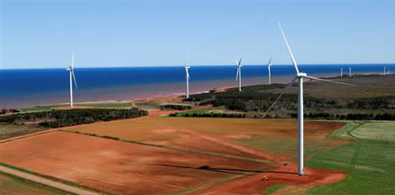
AH: WEICan is a nonprofit organization founded in 1981 that contributes to the growth of wind energy across Canada through research, testing, innovation, and collaboration. WEICan is located in North Cape, in the northwestern part of Prince Edward Island. Our Laboratory is equipped with a 10 MW R&D wind farm, 223 kWh of storage, 109 kW of double-sided and single-sided photovoltaic panels, and two weather masts compliant with International Electrotechnical Commission standards to support research on wind and photovoltaic energy
I have been a volunteer board member since 2015. The research committee has grown significantly, not only in scope but also in the depth of its staff, and we now place a high priority on research.
One of WEICan’s strengths is the integration of wind energy into the grid. We have conducted this research in many different ways, in collaboration with researchers specializing in wind energy across Canada, with Maritime Electric, and with the island’s other wind farms. Our primary objective regarding grid integration is to demonstrate the ability of wind turbines and batteries to provide ancillary services to the grid. We serve as the secretariat for Natural Resources Canada’s Public Utilities Forum, which brings together representatives from public utilities in every Canadian province to address issues related to the integration of renewable energy into the grid.
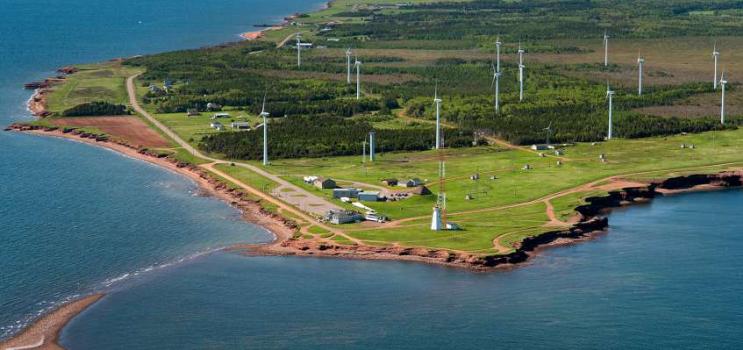
Source: Government of Prince Edward Island
The second area on which WEICan is focusing its efforts is asset management and useful life estimation. The advisory board recommended exploring end-of-life potential, and we are now looking into the possibility of incorporating this potential into asset management, as many people are beginning to show interest in this area. We recently completed a project with the University of Windsor, the University of Western Ontario, Enbridge, and Kruger Energy to develop a flexible tool to better characterize and improve the operation and maintenance of wind farms.
Another issue of great interest to the board of directors is the idea of fostering a mindset of sustainability, and how an individual can be a leader or take the initiative to demonstrate that sustainable development isn’t just about generating energy—and specifically wind energy—but also about our mindset. The concept of sustainability is also deeply rooted in our perspective, and it is tied to our culture—to who we are as a nation. This, therefore, relates to raising awareness and education.
WEICan recently launched the Canadian Energy Research Network . This network aims not only to serve as a platform for collaboration but also to advance the adoption and impact of research outputs, and to ensure that industry and government play an active role in shaping the direction of research. The network has just offered its first series ofonline workshops in 2021.
Nergica: Although Canada’s emissions decreased by 1% between 2005 et 2019, emissions reductions in New Brunswick, Nova Scotia, and Prince Edward Island were significant: -38%, -30%, and -14%, respectively. How do you explain such a sharp drop in emissions in PEI?
AH : I think the Renewable Energy Act A law passed in 2005 helped reduce emissions. Under this law, 15% of our energy was required to come from renewable sources—including energy purchased from outside the province—by 2010 at the latest. However, a few years later, the law was amended and this requirement was removed. It likely set PEI on the right track, though. In addition, efforts have been made to generate more renewable energy locally using wind turbines. We have seen a sharp increase in PEI’s renewable energy generation capacity [from 15 MW in 2005 to 205 MW in 2018], and today, 98% of the electricity generated on the island comes from wind turbines. However, PEI still imports 60% of its electricity needs.
Nergica: PEI is an interesting case; it generates its electricity almost entirely from wind power. However, it is not self-sufficient and therefore imports electricity from New Brunswick, which does not necessarily come from renewable sources. Could PEI increase its capacity to become fully independent and rely solely on renewable energy, or would it not be worth the effort?
Source: Canadian Wind Energy Institute
AH : It’s hard to answer that question, since there are many factors at play, some of which are external. For example, there are political issues that can be difficult to assess. All types of energy distribution and production companies are linked to the provincial government, aren’t they?
There is also a social aspect—the idea that “we’ve always done things this way”—and this dynamic is difficult to change. On the other hand, we have companies focused on developing electrical technologies, for example for the maritime sector. As a result, we have the opportunity to have a seat at the table and support the energy transition through the research and innovation carried out by our small and medium-sized businesses here in the Maritimes.
A comprehensive PESTEL analysis [political, economic, sociological, technological, environmental, and legal/regulatory] would be necessary to fully answer your question. I believe it is feasible for the province to become completely independent and rely solely on renewable energy sources, given our small population. We could show Canada that it is possible to achieve this. It would be interesting if the federal government viewed PEI as a “test model” and if the province served as a demonstration of energy independence.
Nergica: Halifax was one of the first cities to declare a climate emergency. Nova Scotia is a leader in climate policy, and PEI has set the most ambitious carbon neutrality target in Canada. Do you think residents of these provinces are more aware of the climate emergency and more willing to take action?
AH: If we look at the general public’s mindset here, I don’t think we’re any more environmentally conscious than people elsewhere in Canada. However, PEI was one of the first provinces to ban single-use plastics and plastic bags. That came as quite a surprise to tourists that first summer! We’re also number one in wind power generation, and the islanders know it.
–
Otherwise, I don’t think PEI is at the forefront of incentives that could help raise public awareness and encourage public engagement in reducing emissions. The government has introduced a few rebates for solar panels and heat pumps over the years, but these rebates have never really made much of a splash in the press. An incentive was also recently launched for the purchase of an electric vehicle, but the conditions are somewhat restrictive, and the rebate isn’t high enough to make it affordable for the average person to buy an electric vehicle.
From my perspective, I think some people are not yet aware of the urgency of climate change and the need to protect the environment. I don’t think these issues have yet been fully understood and accepted in our daily lives. We need better communication and more communicators. Perhaps we’re not doing a good enough job in this regard, or perhaps people simply don’t want to understand the message, no matter how effectively we convey it.
Students have the opportunity to learn, go home, and tell their family and friends: “Hey, climate change is real. And as engineers—and as global citizens—we can make a difference.” ” The other generation that seems to understand just how crucial it is to protect the environment is the older generation, who are now seeing what has become of our lands and care deeply about the future of coming generations.
Nergica: In your opinion, what are the main challenges associated with reducing GHG emissions and implementing renewable energy?
AH : As we’ve discussed, education and communication are major challenges, in my view. I try to change perspectives in my own way, when I’m teaching, but there needs to be broader awareness. I don’t feel that people are sufficiently engaged or concerned. I’m convinced that things are changing for the better, but not fast enough. The changes are well underway, and I think it may take a decade—another generation. This is a challenge for regions where oil and natural gas were, and still are, so economically important. When people rely on these jobs, it’s hard to change their perspective. The challenge here is that the economy, culture, and education are closely intertwined.
Source: Natural Resources Canada
We also need greater leadership—whether from the government or from the community itself. The concept of renewable energy still has immense potential for growth, and this growth would require both a bottom-up and a top-down approach. Once again, we come back to the idea that we need to communicate more about the climate emergency, and young people could lead this paradigm shift. Imagine a child going to a soccer game, coming home, and telling their parents: “I rode in my friend’s electric car—it was really awesome.” Leadership could take many intangible forms and, ultimately, raise awareness and set an example for a new, environmentally focused mindset.
When it comes to incentives—whether for installing solar panels on homes or purchasing an electric vehicle—I think this is a good start, but we need to take things further. And for now, we don’t see a shift in mindset that could have a lasting impact.
Nergica: Actually, your two points seem to be related. We can only expect long-term effects from incentives if the communication surrounding them is effective, right?
AH: That’s right. Unfortunately, incentives are often just monetary amounts, and that’s why they can become politicized, whether at the provincial or federal level. And often, things stop at the dollar sign. When we implement incentives, we also want to bring about a change in mindset. But to change a person’s lifestyle or mindset, it takes more than just a dollar sign.
What I mean is that installing solar panels on your home or buying an electric vehicle comes at a cost, but it’s also a different way of approaching energy consumption and its cost. Such investments involve a high upfront cost—and on an annual basis, they may not be much less expensive—but they represent a commitment to taking responsibility and taking concrete action by choosing to spend your money on green technology rather than burning fossil fuels.
–
I am aware that there is an element of privilege in what I am describing. I can afford to buy solar panels and an electric vehicle. The next step would be to adjust these incentives so that green technologies are accessible to everyone; perhaps these measures could be more inclusive. And it’s important that they aren’t aimed solely at a small number of people with specific knowledge or interests. Money from incentives alone won’t solve the problem; we need awareness, information sharing, and incentives to foster an environmentally friendly mindset or lifestyle.
Many people on the island have embraced wind power. For example, many farmers have installed small wind turbines on their land. Unfortunately, it seems that these turbines have been neglected over the years, and many of them are no longer operating due to a lack of incentives to support their maintenance.
I also see this situation as an opportunity to create jobs. The new era of energy transition involves new skills and knowledge needed for the green economy, which are being developed at community colleges, vocational schools, and universities.
This interview was conducted as part of a series of regional profiles on renewable energy in Canada. To hear the perspectives of other experts and stakeholders in the energy transition, join us for the second Transition Solutions Symposium in March 2022. This Canada-wide event is dedicated to the technological, social, and policy innovations needed to implement renewable energy in Canada and advance the energy transition.
Another publication in the series:
Johanne Whitmore, Principal Researcher at the Chair in Energy Sector Management at HEC Montréal
More coming soon!
Stay up to date on the latest industry news by subscribing to our newsletter today.

Privacy policy ©2026 Nergica | Réalisation DACTYLO