
 See all news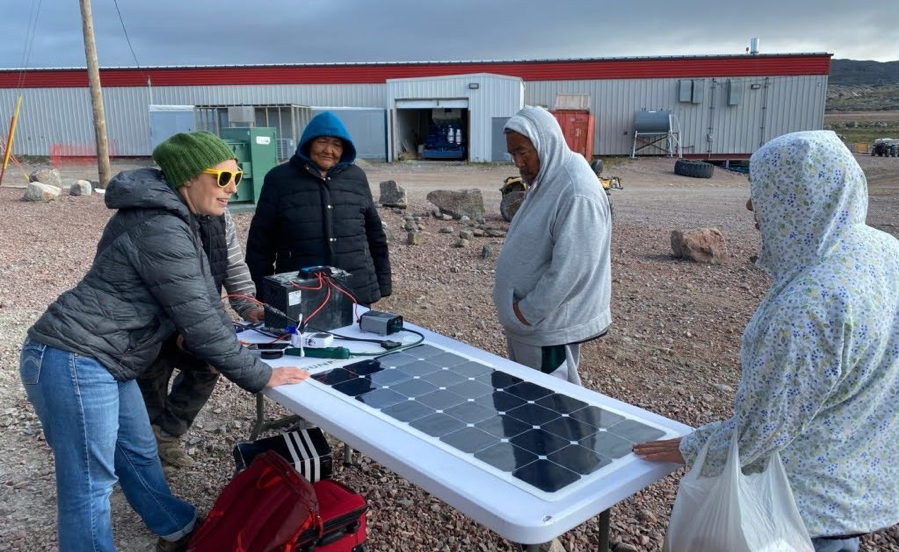
How to reach us
70 Bolduc Street, Gaspé, Quebec
Canada G4X 1G2
This Canada-wide series of interviews with energy transition experts provides an overview of the deployment of renewable energy in various regions across Canada and the measures being implemented to achieve carbon neutrality.
Today, we’re discussing the deployment of renewable energy in the Territories and Indigenous communities with Dr. Michael Ross, Chair of the Industrial Research Council’s Northern Energy Innovation Unit at Yukon University.
Let’s start by reviewing the targets set by the federal and local governments for reducing greenhouse gas emissions.
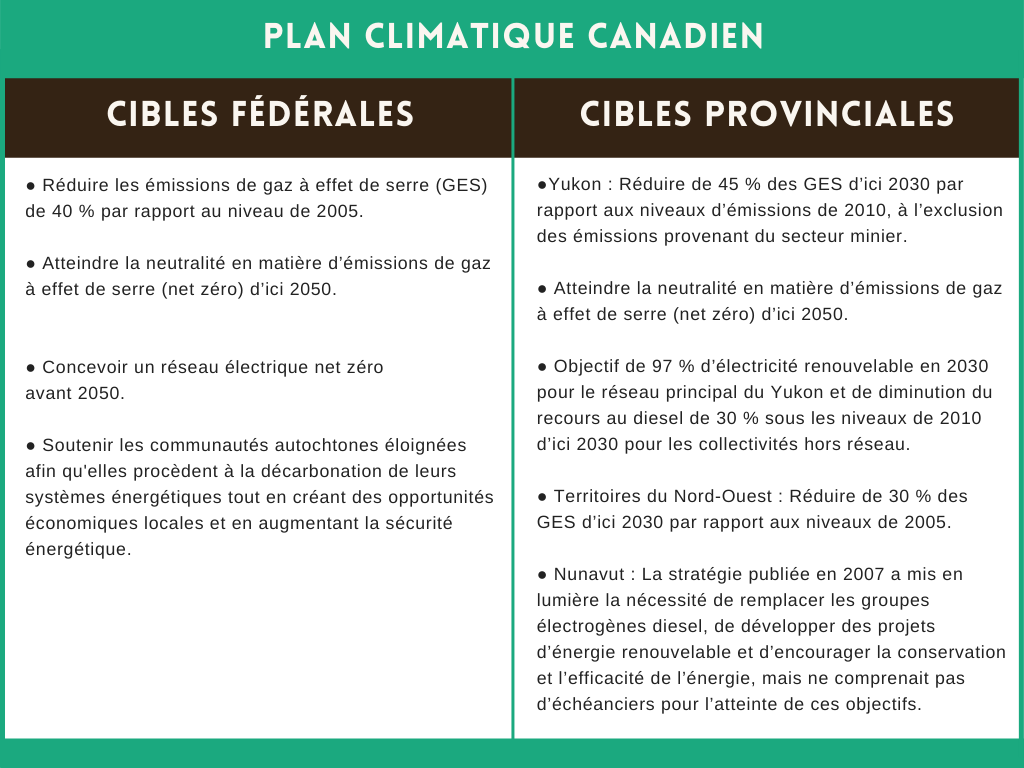
Reference: Pembina Report 2021: All Hands on Deck
Nergica: Could you tell us a little more about your involvement with Yukon University and the Northern Energy Innovation Unit?
Dr. Michael Ross: I think the best way to explain this is to describe how we are funded—50% by electric utilities and the territories, and 50% by the federal government, through the Natural Sciences and Engineering Research Council of Canada (NSERC). As a result, the CEOs and managers of northern electric utilities work together to identify which research areas are most relevant to the northern energy sector, and we undertake projects that address those needs. Furthermore, in the North, it is impossible to carry out a research project without partnering with local communities. We therefore collaborate with numerous Indigenous governments and communities on their large-scale energy projects.
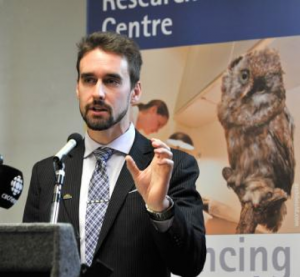
Dr. Michael Ross. Photo: Yukon University
Our main focus is on the technical aspects—that is, power systems and everything related to the generation, transmission, distribution, and use of electrical energy. Since we have a partnership with the electric utilities—Yukon Energy Corporation, ATCO Electric Yukon, and Northwest Territories Power Corporation—we collaborate with their technical staff to solve the problems the utilities face, particularly in the area of research. Each of our projects has a practical application. Don’t get me wrong—it’s incredibly exciting to work on theory, but it’s rewarding to work on community energy projects and see them come to life.
For example, as part of the Old Crow (Yukon) solar project—we worked on this project a few years ago—and last month, the community shut down its diesel generators. This is a project that delivers tangible benefits. And since we’re also funded by the federal government, all the work we do must be freely accessible and available to everyone.
Nergica: You’re based in the Yukon, but you work in all three territories. Can you give us an overview of the energy mix and the current situation in each of the territories?
MR: First, none of the Canadian territories’ power systems are connected to the North American grid; they are all isolated systems. However, we have what we call the Yukon Integrated System which is a high-power system. We have a large amount of hydroelectric power to supply distribution centers like the one in Whitehorse, but we also have five diesel-powered isolated systems that are not connected to the Yukon Integrated System. During the winter, the Yukon’s integrated system still must be supplemented with diesel and liquefied natural gas generators to meet our needs, and these fuels must be imported from the south. In the Yukon, we face a capacity challenge because, as an isolated system, we are unable to import or export additional electricity. Consequently, when we exceed the capacity of our hydroelectric resources, we must supplement our supply with fossil fuels.
In remote communities, diesel-powered systems are the norm. However, there are initiatives to enable communities to integrate renewable energy into their systems through the Independent Power Production Policy. There is a genuine desire to make progress toward phasing out diesel use in the Yukon.
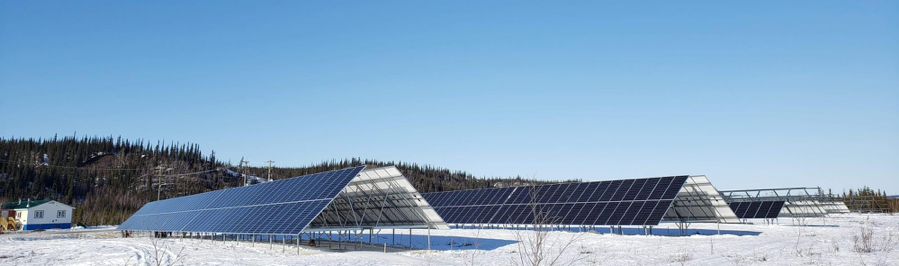
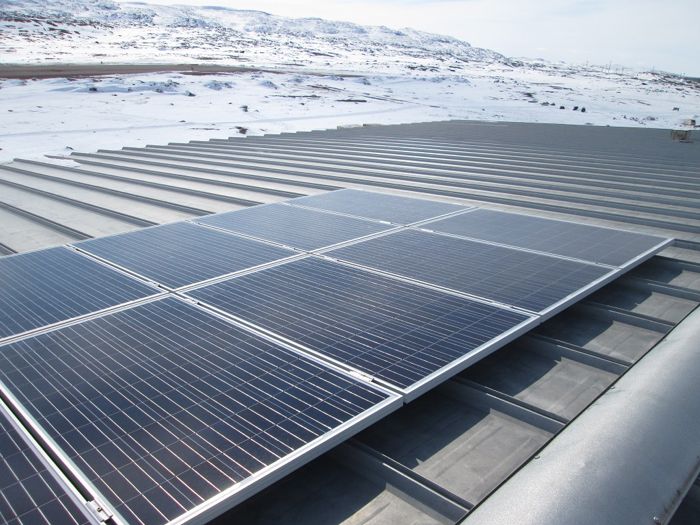
Solar Panel Project in Old Crow (YK). Source: Solvest Inc.
The Northwest Territories are home to two hydroelectric systems—one north of Great Slave Lake and one south of Great Slave Lake—as well as 25 communities within their thermal belt. These communities rely primarily on diesel, but some are also powered by natural gas.
Now let’s talk about Nunavut: it has 25 communities, all of which rely on fossil fuels for power, with no infrastructure connecting them to one another. In terms of land area, Nunavut is twice as large as Ontario and is home to 25 communities. If we look at the North as a whole, we see a challenge: if the three territories were a country, they would be the 7the largest country in the world by land area. And its population density is 10 times lower than that of the Sahara Desert.
All these unique characteristics come with their own set of challenges. Connecting everything is one of the major challenges, because there are no economies of scale in the North. And we, the residents of the North, rely on fossil fuels for much of our transportation, heating, and electricity. So, even though we want to stop using fossil fuels, it is very difficult—and very expensive—to do so reliably, so we remain dependent on imported fossil fuels.
Nergica: Ensuring energy security is likely the main challenge, given the complexity of electricity generation in the North. And this is a “matter of life and death” in the short term, whereas the use of green energy has longer-term implications. How much emphasis is placed on the implementation of renewable energy in these regions?
MR: Yes, exactly—we need a reliable source to provide Northerners with the energy they need. For example, a power outage in Montreal is a huge inconvenience, but a power outage in a remote community could be critical and escalate very quickly. In the Yukon last year, an avalanche on the South Klondike Highway prevented the delivery of liquefied natural gas and diesel, and just one more day would have been enough for us to experience a power outage during one of our winter storms. That is why it is essential to have a reliable and continuous source of electricity.
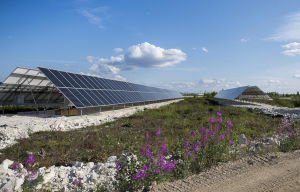
Source: Government of Yukon
Although diesel is a very reliable source of electricity, many Northerners want to stop using it, and governments have launched an initiative to phase out fossil fuels as much as possible. For example, the Yukon government has adopted a clean energy strategy and aims to achieve carbon neutrality by 2050. By 2030, the government aims to have 97% of its electricity supply come from renewable sources and to reduce greenhouse gas emissions by 30%. People in the North have a larger per-capita carbon footprint, mainly due to transportation. There aren’t many fast-charging stations for electric vehicles, and if you aren’t connected to hydroelectric systems, there are few options for accessing renewable electricity.
Nergica: Is grid expansion a relevant issue and topic of debate for local communities, or is ensuring that each community can be self-sufficient and generate electricity from renewable sources the only issue of interest, given their needs and constraints?
MR: Several organizations are actively exploring ways to expand the grid. They are examining options for connecting to the North American grid, but the costs associated with distance and general local economies of scale make such a connection very difficult. Nevertheless, we should conserve our resources and remain self-sufficient to ensure the security of our systems.
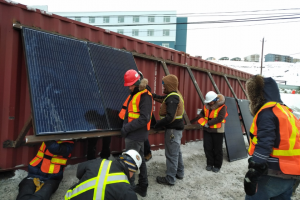
Training on solar panel installation in Iqaluit (NU), offered by the Arctic Renewables Society. Sources: WWF Canada/Martha Lenio
For example, in the Kivalliq region of Nunavut, a high-voltage interconnection with Manitoba, as well as high-speed internet and road access, are currently being studied. It may also be possible for the Yukon to receive electricity from British Columbia. The Taku River Tinglit First Nation in Atlin (British Columbia), which is accessible by road only through the Yukon, has a hydroelectric capacity of about two megawatts that powers its community, and has the potential to increase that capacity by about eight megawatts. This is a community with an isolated system that does not need additional electricity, but Yukon Energy and the Yukon Integrated System could use this hydroelectric power—particularly in the winter—rather than importing more fossil fuels. However, since it is supplied by BC Hydro, in order for the community to supply electricity to the Yukon, it must have two separate generators that are electrically isolated from one another: one generator that supplies the community with electricity from BC Hydro, and a second that feeds into the Yukon Integrated System. Regulatory issues are both an enabler and a challenge, and they are something we have to navigate as we develop a project.
Nergica: The regions’ contribution to Canada’s total emissions is very small. However, the impacts of climate change are felt disproportionately in the North. I wonder what the general public’s perception of renewable energy is and how interested they are in it.
MR: People in the North want to go green; we want renewable energy options. However, this is a major challenge in the North, and here we’re seeing the effects of climate change unfold twice as fast as elsewhere. We have extensive infrastructure built on permafrost, and this infrastructure is beginning to collapse due to rising temperatures. The effects are therefore very visible and very tangible.
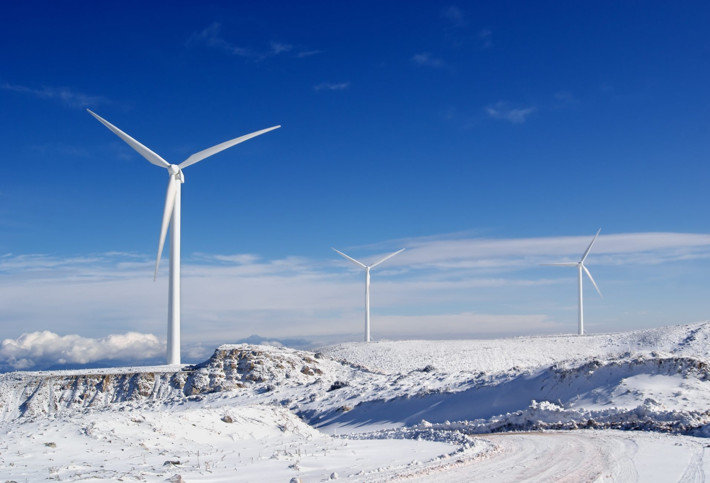
Nunavut Nukkiksautiit Corporation. Source: Qikiqtaaluk Corporation
Furthermore, sustainable development is a core value for many First Nations. The idea of relying on locally sourced resources rather than purchasing polluting fuel for diesel generators is appealing. Fuel spills are also a threat we wish to avoid.
Power generation from wind and solar energy does not align well with communities’ sustainable development values, but these options could help communities reduce their dependence on imported fossil fuels and create a local source of revenue. When electricity comes from an independent power producer, that money circulates within the community and boosts the local economy; therefore, there are many benefits to community energy projects.
Nergica: The economic benefits for remote communities of transitioning from diesel generators to wind and solar power are often the subject of debate, and they can sometimes be difficult to assess in advance. It is not always clear that implementing renewable energy will be less costly for the community and will create jobs that will offset those that have been lost. How do these factors come into play in your projects?
MR: You are absolutely right: every community has its own values and economic priorities. In different contexts and areas of jurisdiction, these projects can generate different value streams—both economically and personally—but this is not always the case.
One example is the community of Inuvik in the Northwest Territories, where there is significant natural gas extraction activity, which can benefit the local economy. When it comes to solar energy, the ideal scenario is to install the infrastructure and then have very little maintenance required. These projects therefore do not necessarily create more jobs.
There are various reasons why different projects are implemented, each involving different trade-offs. If there were a solution that was 100% renewable, reliable, economically viable, and socially responsible, we would have implemented it already! The challenge is to understand the trade-offs, which can vary from one community to another.
Nergica: In your opinion, what are the main challenges associated with reducing GHG emissions and implementing renewable energy in local communities?
MR: As for utility companies, their mandate is to provide safe and reliable electricity. And since we can’t make the wind blow or the sun shine, renewable energy sources introduce uncertainty and variability. Isolated power systems do not allow us to import or export electricity. Furthermore, diesel generators themselves have specific operating characteristics; load capacity constraints are minimal, or the generators’ efficiency is not constant across their entire operating range. Other factors must be taken into account to successfully integrate renewable energy into remote power systems.
The economic issue also comes into play, given that we lack economies of scale. The investments made for a given project benefit only a limited number of people, and it is difficult to raise capital for such small populations. Operations management and maintenance are also a challenge, as it is neither easy nor very cost-effective for us to travel to this facility. We do not want to end up with a graveyard of cutting-edge technologies.
Nergica: Do the unique characteristics of the Nordic environment pose any technical challenges?
MR: The objectives of energy projects often differ depending on whether they are developed in the North or the South. In the South, the goal may be to maximize the amount of electricity generated; thus, the panels are installed at an angle to optimize energy production. But in the North, this may not be the case, depending on the specific objective.
In the North, many solar panels are installed vertically, as this orientation helps prevent snow buildup and captures the albedo of sunlight reflected off the snow. Because of this albedo effect—and the fact that they are more efficient at colder temperatures—solar panels tend to produce more than their rated capacity. In the North, solar panels are oriented east-west; they do not even face south. This orientation does not necessarily maximize renewable energy production, but in the North, during the summer, the sun follows a circular path across the sky and is never directly overhead.
Some projects require solar panels to generate electricity that matches the community’s demand profile as closely as possible, so smaller battery systems are needed. When facing east and west, solar panels generate electricity that more closely matches the community’s consumption profile; thus, the amount of energy that needs to be stored is minimized. On the other hand, if we consider, for example, the White River First Nation in Beaver Creek, which wants to maximize its renewable energy production, it orients its panels to face south. It all depends on the problem at hand. This doesn’t mean it can’t be done, but there are specific challenges in the North that must be taken into account to develop a successful project.
This interview was conducted as part of a series of regional profiles on renewable energy in Canada. To hear the views of other experts and stakeholders in the energy transition, join us atTransition Solutions Symposium on October 14, 2021 and register now. This Canada-wide event focuses on the technological, social, and policy innovations needed to implement renewable energy in Canada and advance the energy transition.

Another publication in the series:
Johanne Whitmore, Principal Researcher at the Chair in Energy Sector Management at HEC Montréal
More coming soon!
Stay up to date on the latest industry news by subscribing to our newsletter today.

Privacy policy ©2026 Nergica | Réalisation DACTYLO