
 See all news
 How to reach us
70 Bolduc Street, Gaspé, Quebec
Canada G4X 1G2
In 2019, solar power, along with wind power, accounted for 90% of the increase in installed renewable energy capacity worldwide. Solar photovoltaics (PV), which accounted for the largest share with 578.5 GW of installed capacity, recorded annual growth of 98 GW—five times more than in 2010. Asia accounted for 57% of the world’s cumulative installed solar photovoltaic capacity, with 330.1 GW. China remains Asia’s largest solar PV market, with 205.5 GW of cumulative installed capacity.
In Europe, Germany stands out in particular, accounting for 49.0 GW of the 140.5 GW of cumulative installed capacity as of the end of 2019. Similarly, the state of California tops the list in the United States, with total solar power capacity reaching, in 2019, 27.3 GW, representing 20% of California’s total electricity generation and 38% of its renewable energy production. The dramatic drop in costs, strong policies, and numerous incentives implemented in these two jurisdictions explain the significant growth in solar installations.
Declining costs and significant technological advances
This significant advancement in solar PV can be attributed to various factors. Unprecedented growth in global energy demand, coupled with the environmental impacts of fossil fuel use, is forcing nations to undertake a major energy transition toward more sustainable energy sources. Clean, abundant, and renewable, solar energy is therefore one of the most promising energy resources.
The significant decline in costs and the increased capacity for large-scale production and operation of increasingly efficient modules also work in favor of solar energy. According to the latest data from the International Renewable Energy Agency (IRENA), the levelized cost of electricity (LCOE) for grid-connected solar PV power plants fell by an average of 82% between 2010 et 2019, while the price of polycrystalline PV modules fell by 90% over the same period. No other electricity-generation technology has been able to keep pace with such a rapid rate of cost reduction.
Canada: A Country with Great Potential
In 2018, Canada ranked fifteenth globally in terms of cumulative installed photovoltaic solar power capacity. At the end of 2019, the country’s cumulative installed capacity of grid-connected solar photovoltaic systems was estimated at 3.3 GW, representing an average annual growth rate of 354 MW per year since 2011. This ranking was driven in particular by Ontario, which accounted for 94% of Canada’s solar PV installations in 2019. Solar installations in Ontario increased tenfold thanks to attractive financial incentives implemented following the passage of the Green Energy Act in 2009. The law aimed to develop the renewable energy sector and create new jobs; it was a scaled-back program that was ultimately repealed in 2019.
Cumulative Installed Capacity of Grid-Connected Solar PV in Canada's Provinces and Territories in 2019
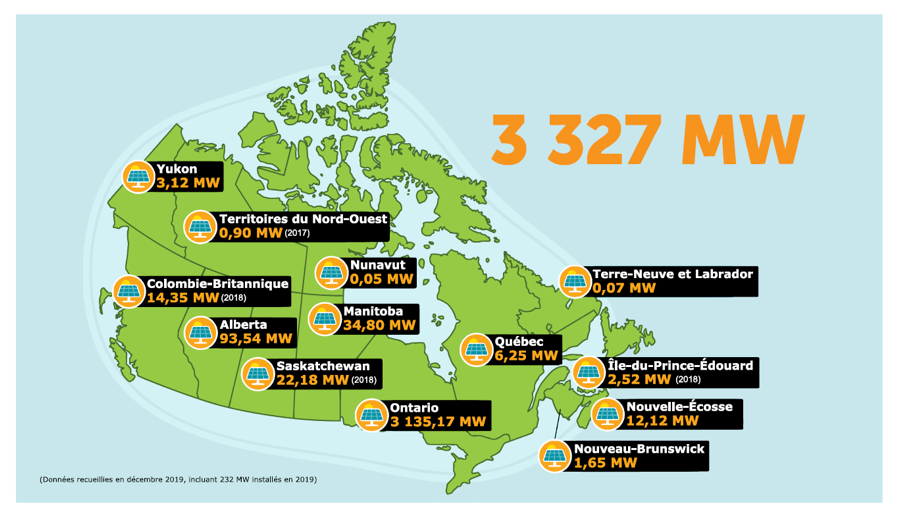
Source: Natural Resources Canada, 2020
However, whether due to steadily falling costs, incentives introduced by certain governments, or environmental and climate emergency concerns, solar PV is slowly but surely gaining ground in Canada.
The Canadian market for solar photovoltaic installations consists primarily of a combination of distributed generation systems—such as residential and commercial installations—and large-scale solar power plants. Thus, by the end of 2019, the installed capacity of solar PV systems in Canada stood at 1,178 MW for distributed generation systems and 2,148 MW for centralized generation systems[1]. Numerous installation projects are also in development, particularly in Alberta, which is now Canada’s leader in new projects.
Alberta currently ranks second in Canada in terms of solar capacity, with an installed capacity of 93.5 MW in 2019[2]. According to Rystad Energy[3], 83% of new commercial-scale solar and wind infrastructure built in the country will be installed in Alberta over the next five years. Rystad Energy estimates that installed solar capacity in Alberta will reach 1.8 GW by 2025.
In Canada, each province and territory is responsible for its own energy supply. As such, these jurisdictions set their own goals for the development of the renewable energy sector. The main drivers for the development of the renewable energy sector—and solar photovoltaics in particular—remain, first and foremost, targets for reducing greenhouse gas (GHG) emissions. In addition to environmental incentives, falling costs, growing energy demand, and policies and financial support measures are major drivers of growth in Canada, as elsewhere. However, the repeal or absence of policies promoting its development, the limitations of the regulatory and standards framework, and the challenges associated with managing this variable energy source (at high penetration rates) have a negative impact on the solar sector.
Solar Energy in Quebec: A Cornerstone of the Energy Transition
With only 6.25 MW of total installed capacity in 2019—less than 1% of Quebec’s energy mix—Quebec ranks seventh in Canada in terms of cumulative installed capacity. However, Quebec will double—or even exceed—the capacity recorded at the end of 2019 when the two solar facilities totaling 9.5 MW, built by Hydro-Québec in La Prairie and Varennes, come online in 2021. Once completed, these plants will be able to supply power to the equivalent of nearly 1,000 residential customers.
Although it is not very widespread, decentralized solar PV generation does indeed exist in Quebec. In March 2019, Hydro-Québec’s report indicated that more than 700 solar PV self-generators were enrolled in the net metering program[4]. These figures do not include producers not connected to the integrated power grid, such as vacation homes or off-grid systems.
Although Quebec enjoys solar irradiance ranging from 2.84 kWh/m2/day and 3.68 kWh/m2/day, which is higher than that of Berlin, Germany (2.90 kWh/m2/day), the province has shown little interest in solar energy so far. This is not surprising, given that Quebec has some of the lowest electricity rates in North America and is experiencing an energy surplus that is expected to last until 2026. Added to this are policies and incentives that remain limited, a regulated market where Hydro-Québec holds a monopoly on electricity distribution—in short, a combination of factors that act as barriers to the development of the solar industry.
However, the decline in the costs associated with solar PV, which has been observed over the past two decades and is expected to continue through 2030, makes it an attractive option for energy supply. Growing demand—particularly in light of the electrification of transportation and buildings, the development of markets such as greenhouses and data centers, and the increase in electricity exports to the United States—also presents promising growth opportunities for Quebec’s solar industry.
Despite energy losses due to snow accumulation, which can reach 5% annually[5], Quebec’s solar potential remains promising. For example, each kilowatt of installed capacity in southern Quebec can generate up to 1,250 kWh per year, which is comparable to figures recorded in Ontario.
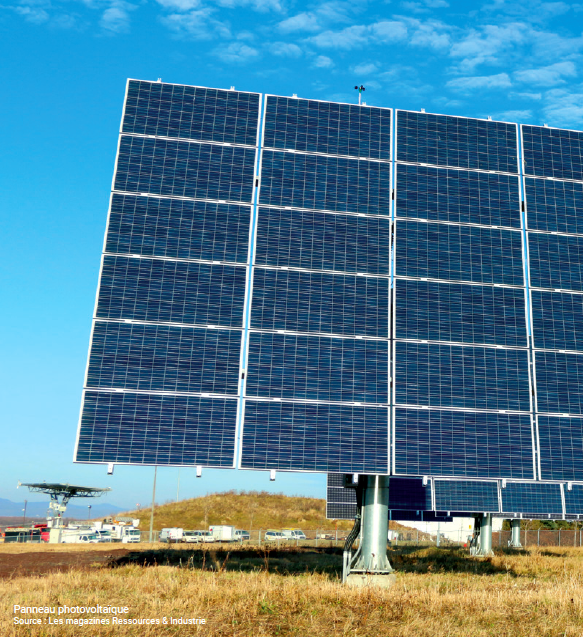
Solar energy: one of the solutions for reducing fossil fuel consumption
In line with the objectives of the 2030 Energy Policy, the Government of Quebec aims to reduce petroleum product consumption by 40%. To achieve this, it plans to increase total renewable energy production by 25% and completely phase out the use of thermal coal. The government also plans to implement projects to convert off-grid systems to increase the proportion of electricity from renewable sources available to communities not connected to Hydro-Québec’s integrated power grid to 20%. The government also aims to make solar energy a source of business opportunities for Quebec.[6].
Off-grid solar PV systems are being commissioned throughout the province. This is the case in Kuujjuaq and Quaqtaq, where solar PV panels have been deployed to reduce these communities’ fossil fuel consumption and to enable thestudy the impact of integrating solar photovoltaic energy into off-grid systems under northern conditions[7]. An initial project led to the installation of 70 kW of solar PV panels in Kuujjuaq[8]. Quaqtaq subsequently commissioned 21 kW of solar PV on the thermal power plant site in 2018 and an additional 24 kW on the roofs of four residences the following year. This northern village also benefits from the first energy storage system—a 600 kWh battery—deployed in a Hydro-Québec off-grid network[9].
Assessment of Solar Energy Production Costs in Quebec
According to a 2018 study by Natural Resources Canada (NRCan), the costs of PV systems and solar electricity in Quebec vary depending on the installed capacity in the residential sector. In fact, the higher the installed capacity, the lower the cost per watt. For example, a PV system with an installed capacity of 6 kW had already reached, in 2018, the grid parity threshold between the cost of a solar PV kilowatt-hour and the residential electricity rate in Quebec (Rate D – 2e bracket) under certain conditions[10]. With the cost of hydroelectricity having risen by 26% over 20 years and the cost of solar power decreasing every year, the grid parity threshold for smaller PV systems will be reached in the coming years in Quebec’s residential sector.
Hydro-Québec also estimates that the cost of residential solar power—for PV systems ranging from 2 kW to 4 kW—could compete with hydroelectricity rates for the residential market by 2025[11].
Decentralization of Electricity Generation
In recent years, decentralized energy production has been steadily gaining ground around the world. As a result, solar energy could play an important role in achieving the goal of diversifying Quebec’s energy mix and meeting the growing energy demand, which is projected to increase by 15.9 TWh between 2019 et 2029[12]. This corresponds to a 1% increase per year. This rise in energy needs paves the way for the integration of solar energy to meet this growing demand.
The installation of new solar PV power plants in Quebec would help decentralize energy production, which is currently generated primarily in northern Quebec and transmitted over long distances via high-voltage lines. The use of solar PV systems installed directly at residential and commercial sites would lead to decentralization, which would relieve congestion on the distribution grid and reduce various types of losses. Decentralized PV systems would also reduce the strain on the electricity transmission grid, as they would help lower peak electricity demand at certain times of the day[13].
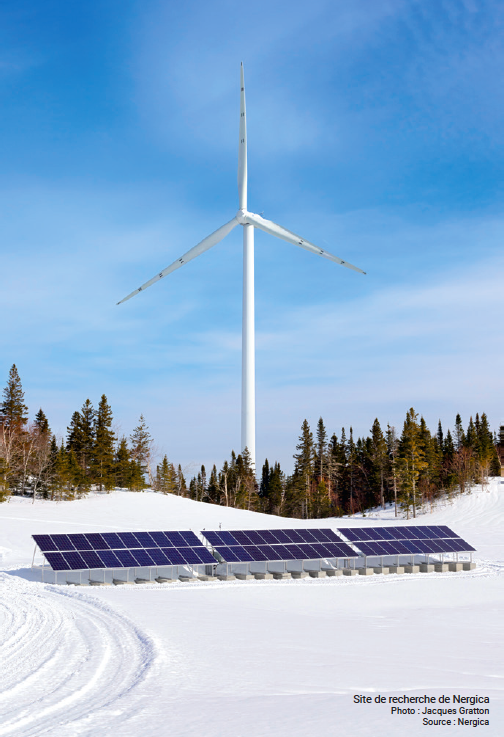 Barriers to Development
To partially meet the projected energy growth by 2029, Hydro-Québec plans to add 0.4 TWh of solar PV capacity for the residential and commercial sectors. The average solar irradiance of 3.21 kWh/m2/day that Quebec receives allows it to produce an average of 1,183 kWh/kWp of PV energy annually. Given this solar potential, a capacity of 330 MW would need to be installed—that is, 40 MW of new installations annually over the next eight years—to reach the target of 0.4 TWh of HQ. However, this capacity would need to be higher to meet GHG emission reduction targets and address projected energy shortfalls by 2027.
The peak kilowatt (kWp) corresponds to the maximum electrical power generated under standard conditions (cell temperature of 25°C and irradiance of 1000 W/m²).
In 2020, Hydro-Québec announced new calls for bids for 2021 to meet future energy demand. Although wind power will be prioritized, these calls for bids will be open to all forms of renewable energy[14].
Increased integration of solar PV energy, particularly self-generation applications, could pose certain challenges for Hydro-Québec. It is therefore necessary to thoroughly assess the impact of this large-scale integration on the power grid in order to maintain high power quality[15]. The solar PV plants in Varennes and La Prairie are also intended to assess and deepen our understanding of the effects of solar generation on the power grid and on the management of the generation fleet[16].
The ground-mounted solar PV industry in Quebec faces numerous barriers that limit its widespread adoption.
On the integrated power grid:
In standalone networks:
A kilovolt-ampere (kVA) is a unit of power (specifically, the maximum power that an electric meter can deliver).
Visit kilowatt-hour (kWh) is the actual power consumed by electrical appliances.
Recommendations
Thus, as part of the study titled “Photovoltaic Solar Energy in Quebec’s Energy Mix—Analysis and Outlook” conducted by Nergica, the research team formulated the following recommendations. These recommendations aim to develop a value chain for the solar PV industry that can contribute to the success of Quebec’s energy transition. To achieve this, the Quebec government will need to implement or consider certain changes:
References
[1] C. Baldus-Jeursen, Y. Poissant, and N. Gall, “National Survey Report of PV Power Applications in Canada 2019,” International Energy Agency Technology Collaboration Program on Solar Photovoltaic Power Systems (IEA PVPS), p. 34, 2020, [Online], [https://iea-pvps.org/wp-content/uploads/2021/03/NSR_Canada_2019.pdf] (Accessed June 17, 2021).
[2] International Energy Agency (IEA), “National Survey Report of PV Power Applications in Canada 2011–2019.” Data used: 2011–2019, [Online] [https://iea-pvps.org/national-survey-https://iea-pvps.org/national-survey-reports/?year_p=&country=44&order=DESC&keyword=] (Accessed Nov. 4, 2020).
[3] A. Neveu, “Alberta Could Become Canada’s Leader in Solar and Wind Energy,” Radio-Canada, 2020. [Online] [https://ici.radio-canada.ca/nouvelle/1735461/alberta-energies-renouvelables-eolien-solaire] (Accessed Oct. 26, 2020).
[4] H. Baril, “Mini-boom in solar energy production in Quebec,” La Presse. [Online] [https://www.lapresse.ca/affaires/economie/energie-et-ressources/201903/22/01-5219334-mini-boom-de-production-denergie-solaire-au-quebec.php] (Accessed Nov. 9, 2020).
[5] These results were obtained through an analysis conducted by Nergica on its solar PV system.
[6] Quebec Ministry of Energy and Natural Resources, “2030 Energy Policy Action Plan,” 2017. [Online], [https://mern.gouv.qc.ca/wp-content/uploads/Tableau-PA-PE2030_FR.pdf] (Accessed on June 17, 2021).
[7] K. Limoges, “Hydro-Québec Tests Solar Panels in Arctic Conditions,” Electricité Plus, 2017. [Online] [https://electricite-plus.com/December 14, 2017/hydro-quebec-teste-panneaux-solaires-conditions-nordiques/] (Accessed Nov. 11, 2020).
[8] Makivik Press Release, “An Historic Year for Makivik Corporation,” Makivik Corporation, 2019. [Online] [https://www.makivik.org/historic-year-makivik-corporation/] (Accessed Nov. 11, 2020).
[9] Hydro-Québec Distribution, “Supplementary Information for the 2020–2029 Supply Plan: Autonomous Networks,” 2019. [Online]. [http://publicsde.regie-energie.qc.ca/projets/529/DocPrj/R-4110-2019-B-0010-Demande-Piece-2019_11_01.pdf] (accessed on June 17, 2021).
[10] Y. Poissant, “Photovoltaic Solar Energy: Status and Trends 2018,” Quebec City, 2018. [Online], 2018, [https://maisonsaine.ca/uploads/2019/02/pv-y-poissant.pdf] (Accessed on June 17, 2021).
[11] Same as above.
[12] Hydro-Québec Distribution, “2020 Progress Report on the 2020–2029 Supply Plan,” 2020. [Online], [http://www.regie-energie.qc.ca/audiences/Suivis/Suivi%20HQD_PlanAppro2020-2029/Administrative%20Follow-up%20-%202020%20Progress%20Report%20on%20the%20Supply%20Plan.._.pdf]
[13] Société d’habitation Québec, “Photovoltaic Panels in Nunavik,” Espace Habitat, 2019, [Online], [http://espacehabitat.gouv.qc.ca/expertise/panneaux-photovoltaiques-au-nunavik/] (Accessed Dec. 10, 2020).
[14] C. Lecavalier, “Hydro-Québec Revives the Wind Power Sector,” Le Journal de Québec, 2020. [Online], [https://www.journaldequebec.com/November 20, 2020/hydro-quebec-relance-la-filiere-eolienne] (Accessed Dec. 3, 2020).
[15] Natural Resources Canada, “Integrating Variable-Output Renewable Energy Sources – The Importance of Essential Reliability Services,” St. Andrews by-the-Sea, 2017. [Online], [https://www.rncan.gc.ca/sites/www.nrcan.gc.ca/files/emmc/pdf/17-0071-Essential-Reliability-Services-access-FR.pdf], (Accessed on June 17, 2021).
[16] Hydro-Québec, “La Citière and IREQ Solar Power Plants,” [Online], 2020. [https://www.hydroquebec.com/projets/solaire-monteregie/] (Accessed on November 9, 2020).
Stay up to date on the latest industry news by subscribing to our newsletter today.

Privacy policy ©2026 Nergica | Réalisation DACTYLO